
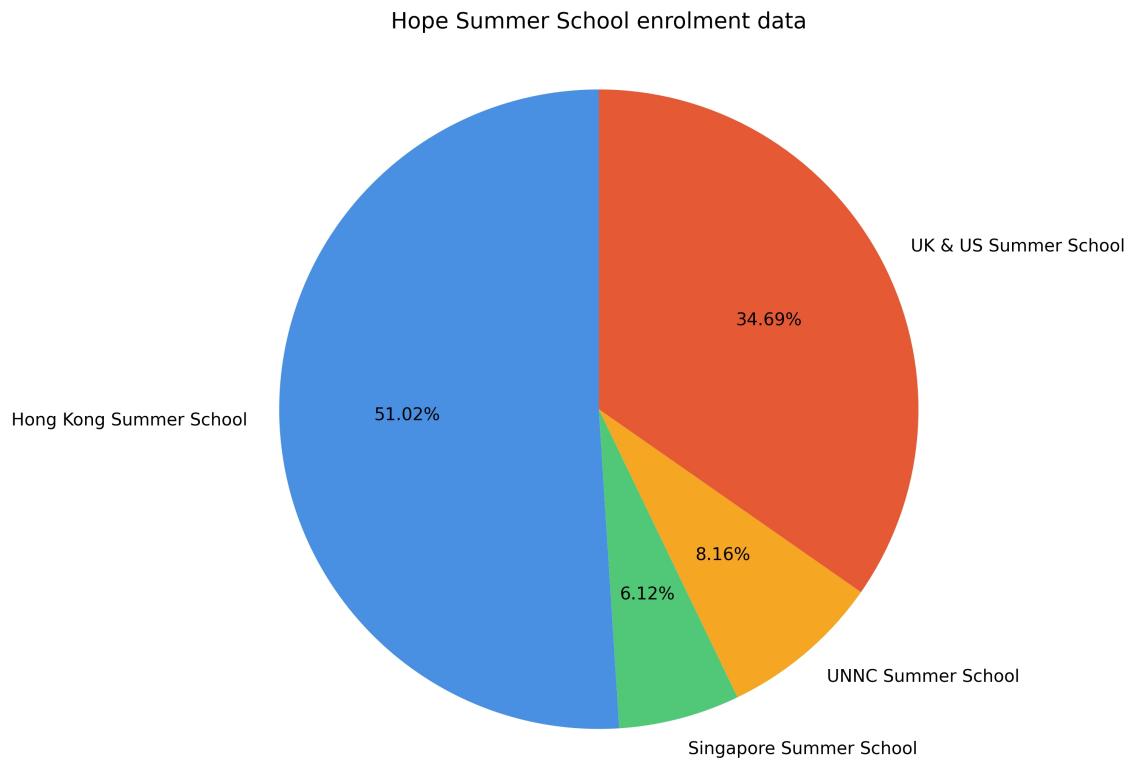
The summer camp market in China is witnessing obvious regional differentiation in demand. Summer programs in Hong Kong and Singapore have maintained growing popularity among Chinese families. Meanwhile, domestic international programs represented by the summer camp of the University of Nottingham Ningbo China (UNNC) have also seen a steady rise in participant numbers. In contrast, summer programs in European and American regions have been suffering from declining demand, mainly affected by global economic downwardness and ongoing regional geopolitical conflicts.
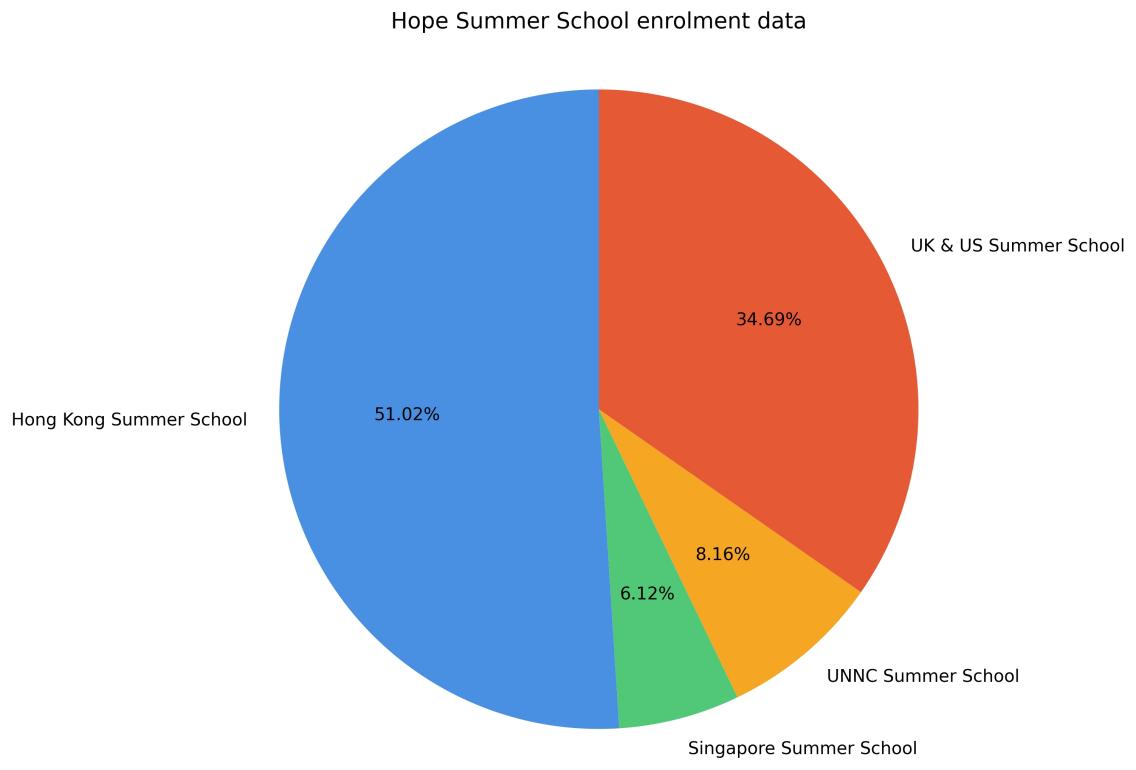
According to enrollment data of Hope so far for the summer 2026, more students have registered for academic summer camps in Hong Kong, Singapore and domestic programs. However, the number of applicants for traditional UK, USA and Australian summer programs remains relatively low compared with previous years.
From the market perspective, the surging demand for Hong Kong and Singapore programs mainly stems from geographical proximity, convenient entry and exit arrangements, stable regional security, high academic value of programs, and relatively affordable overall costs. Short-distance travel greatly reduces time and costs, while their world-class university resources and English-taught academic courses can effectively support students’ long term study application. In addition, integrated Chinese and western cultural environment lowers the adaptation threshold for young students.
As for domestic programs such as UNNC summer camp, they attract a large number of applicants thanks to its mature British education system, top-tier international faculty, and high-quality on-campus academic experience without overseas travel. Such programs perfectly meet families’ demand for high-end international education experience at home, with advantages in convenient travel, controllable costs and reliable safety guarantee.
On the contrary, European and American summer programs are facing shrinking market demand due to the declining study abroad market in these traditional destination countries. High overall expenditure, soaring international travel costs, complicated visa procedures, long-distance journeys, together with uncertain international security situation and regional conflicts, have also raised families’ concerns over safety and budget. Furthermore, the diminishing marginal value of such programs in overseas university application has weakened their attractiveness to applicants.
In conclusion, the overall summer camp market is shifting. Chinese families have become more rational, prioritizing safety, convenience, cost and academic value over blind pursuit of traditional European and American programs. The market structure has gradually evolved into a pattern consisting of premium Asian overseas programs and high-quality domestic international programs.